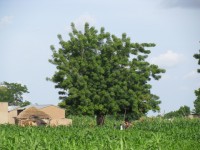
AGROECOLOGY
AGROECOLOGY is the FUTURE of AGRICULTURE
Ecology applied to the design and management of sustainable agricultural (agro)ecosystems. The philosophy of a whole-systems approach to agriculture and food systems development based on traditional, alternative, local and self sustained agriculture food systems. Agroecology blends ecology, culture, economics, and society to sustain agricultural production, healthy environments, and viable food and farming communities.
Agroecology in practice is working in harmony with the land, ecosystem and restores it naturally. Understanding a productive ecosystem is comprehension of those things that have been done that offset its natural balance, recreate it when possible, and utilize Agroecological methods to restore biodiversity. 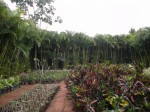
Agro-ecosystems utilize biological alternatives, soil biology strategies and low-natural input technology. In an Agroecological approach natural features are utilized and combine open field with utilization of available forest for diversification of crops, increased yields and potential in perennial diversified agroforestry specialty crops providing high market crop price points. Creation of a closed loop, off grid, self sustaining Agroecological farm with production year round diversifies farm revenue streams. On farm creation of Biochar, soil, nutrients, beneficial bacteria’s coordinated with gravity feed drip irrigation, stepped on contour fields, rain water harvesting, color cards, solar and alternative energy, silvopastoral concepts, aquaculture and animal traction are environmental approaches to the Agroecological farm. Each is synergistic to the other, nothing leaves the farm other than salable product with the balance recycled into meeting energy requirements or the farms landscape for future use.
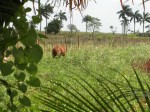
Silvopastoral
The Agroecological farm then is a productive member of the community rather than a hazard to the environment. The diversification provides individual farmers with residual incomes from the Agroecological system that monocrop theories cannot without subsidy. Implications to the carbon footprint are notable and provide a carbon offset. Maximum utilization at less expense in clearing is gained in forested areas with up to 15 year crops or, fast growing, multi-season harvest potentials (mushrooms, fungus etc.). Increase pollenization through diversification is beneficial. Identifying aquaculture techniques provide increase revenue at little cost once established. Production of “green manures” for the farm (azola) reduce water born pest, retard weeds, increase yields and a soft nitrogen fix for the field. Production on farm of Biochar provide a soil amendment older than formal agricultural practice; that is, in and of itself, substantial in slow release of retained water, nutrients, inputs while reducing Co2.
The Agroecological theory must encompass in its on farm system practice a complete approach. Partial application of agroecological theory provide transition for a conventional system and important. Partial theory is also significant to a sustainable agricultural farm. It is however, not truly Agroecological, unless the full theory is employed.
Agroecology is a philosophy.
Some will grasp it quickly, others less so but agro-ecosystem’s practice is a reality we will not be able to avoid. Soil degradation, yearly increase of inputs, energy and an ever decreasing supply of oil will only increase overall on farm cost and force Agroecological concepts to be used for the current agricultural system to succeed. Farmers are dependent on outside forces. Agroecological farms are self sustaining!
—
“ALL FOOD THAT’S FIT TO EAT”™
To request permission to use any material from this site submit your request via e-mail to the Copyright Clearance Center Inc. at www.copyright.com cc neem@neemtree.org. Intellectual property of the corporation, it’s marks, licenses and documents is fully protected by copyright and trademark law, licensed and fully enforced by our intellectual property law firm.™